 ✕
✕
High-Speed Charging for Long-Distance Travel
ExoBoost 250™ is built for highways, inter-city networks, transport corridors, and any location where EVs must charge fast and stay on the road. LithioX Mega™ is Exoben's most powerful lithium-ion energy system, built for factories, data centers, mines, cold storage, commercial facilities, and large renewable energy projects that need strong, stable, continuous electricity.
It delivers strong, stable power even in places where the grid is weak, overloaded, or affected by heat.
Drivers can stop, charge, refresh, and continue their journey with confidence.
Most EVs charge from 10–80% in just 8–22 minutes, depending on the battery size and platform.
Perfect for high-movement areas that need fast uptime:
• 50 kWh EV: 8–10 minutes (10–80%)
• 60 kWh EV: 10–12 minutes
• 80 kWh EV: 12–15 minutes
• 100 kWh EV: 15–18 minutes
• 120 kWh EV: 18–22 minutes
These times make long-distance travel simple and predictable for both private and commercial EVs.
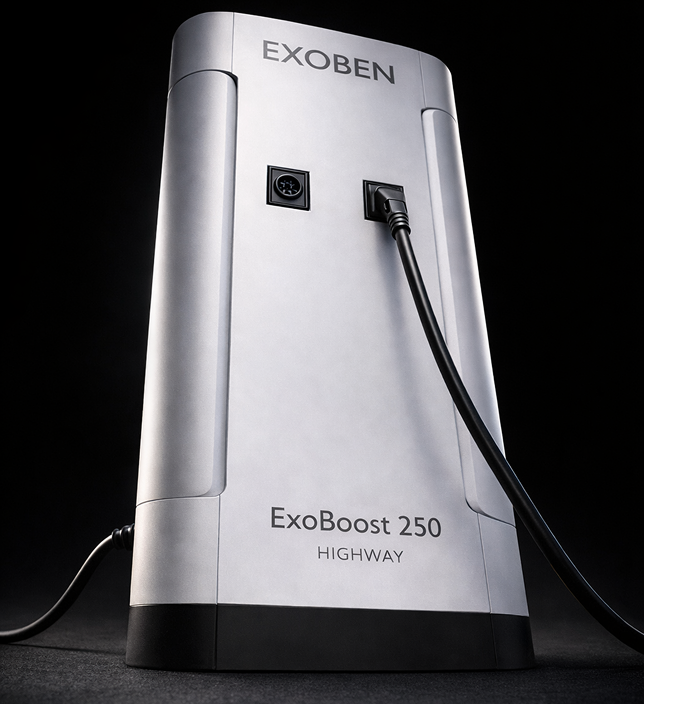
ExoBoost 250 operates reliably in 40–50°C weather, high dust, roadside heat radiation, and continuous daily use.
Key protections include:
• liquid-cooled power modules
• dust-proof ventilation channels
• reinforced metal housing
• anti-corrosion outdoor materials
•high-temperature electronic components
• ability to run 18–20 hours per day without power loss
Highway edges often have unstable grid lines.
ExoBoost 250 keeps running even under difficult power conditions:
• operates from 380V down to 300V AC
• surge protection up to 40 kA
• wide voltage tolerance
• automatic power correction
• active protection against brownouts
This ensures the charger continues delivering power even when nearby stations shut down.
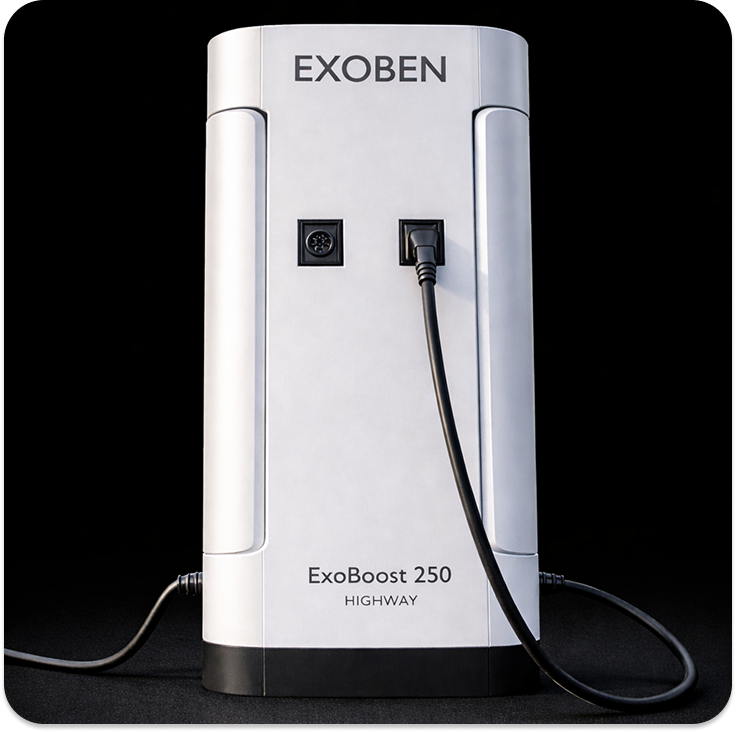
Can be paired with:
Typical storage pairing for highways:
ExoBoost 250 includes advanced charging intelligence:
System response updates every 200 milliseconds for fast, smooth operation.
• IP55–IP65 rating for dust and water
• strong metal frame with anchor points
• anti-tamper systems for public locations
• vibration protection for roadside traffic
• UV-resistant finish
• 10+ year operational lifespan
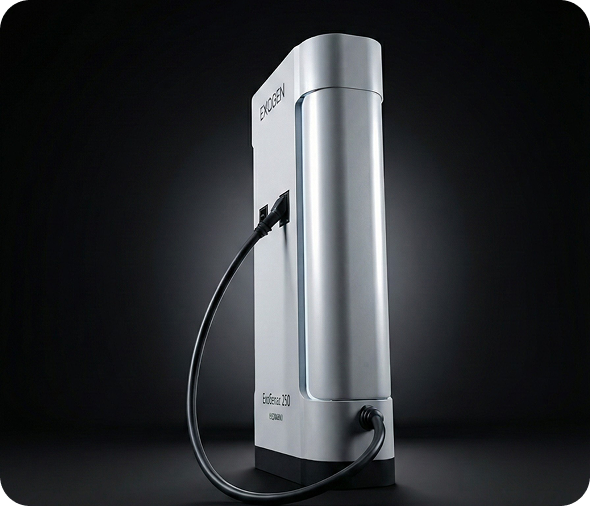
| Category | Technical Details |
|---|---|
| Charging Power | 250 kW DC (continuous output) |
| Charging Times | 8–22 minutes (10–80%, depending on 50–120 kWh EVs) |
| Electrical Output | Voltage: 150–1000V DC • Current: up to 650A • Efficiency: 96.5% |
| Grid Input | 380–480V AC • 3-phase • 50/60Hz • PF ≥ 0.99 • THD < 3% |
| Grid Tolerance | Works from 380V down to 300V AC • Surge protection: 10–40 kA |
| Cooling System | Liquid cooling + forced air hybrid system |
| Temperature Range | −20°C to +55°C |
| Environmental Rating | IP55–IP65 dust and water resistance |
| Electronics | SiC/IGBT power modules • 20–60 kHz switching frequency |
| Energy Storage Integration | Supports 300 kWh – 1 MWh buffer systems |
| Communication | OCPP 1.6 / 2.0.1 • 4G/5G • Wi-Fi • Ethernet |
| User Access | RFID, QR scan, and mobile app |
| Certifications | IEC 61851 • IEC 62196 • ISO 15118 • CE • RoHS |
| Operational Lifespan | 10+ years continuous heavy-duty use |
ExoBoost 250™ is the charging system built for movement.
Fast, powerful, and stable, even in remote highways, harsh heat, and unstable grids.
Drivers charge fast and stay on the road, every single day.